Thursday, December 17, 2020

A Month of Groceries, 7 Days of Water

 It's Cyclone Season again! I've already followed everything on my cyclone prep list so now I'm trying to settle the anxiety moths in my stomach by writing. Tropical Cyclone Yasa is headed straight to Fiji with landfall expected in about 36 hours. 

So, the basics. This is mostly a recap of my tried and tested Cyclone Prep List  with a few additional items and explanations

Things to do: 

  • Establish a communication plan with family and friends. For example, if you are conserving power, you may want to post updates once a day at 10 AM, or twice a day on the 8s, and so on. Have an agreed on platform and identify alternate contacts in case you can't be reached. Make sure your emergency contact list is up to date and in the hands of those who may need it. 
  • Charge everything, phones, computers, ereaders, power banks, portable radios. 
  • Fill the fridge and freezer with as many filled and burped water bottles as you have space for. This helps keep food cold in case of a power outtage and is an emergency water supply. These are good to always keep in the freezer/fridge as they help your appliances run more efficiently; if you always have frozen water bottles in the freezer they're easy to throw in a cooler bag if you're heading out for the day.  
  • Check drains/gutters to make sure they're clear
  • Cut back any trees, branches that could be a danger in high winds 
  • Have cash on hand in case of emergency expenses


Water

  • Bottled water – 4 litres per person per day 
  • Fill up bathtubs, bottles, buckets and other available items with tap water for use bathing and flushing
  • Have a way to boil water before use 

Food

  • 7 day supply of non-perishable food items


Non-Food Items

  • First aid kit and medications and copies of medication prescriptions
  • Gas, cooking utensils, can opener, stovetop teakettle, coffee maker, paper napkins and disposable utensils 
  • Matches or lighters. candles, torch and spare batteries
  • Soap and personal hygiene supplies (toilet paper, sanitary products, tissues etc)
  • Garbage bags and cleaning supplies (including bleach), cleaning brushes, buckets
  • Blankets or sleeping bags
  • Card games, board games, and other activities 


Communications Equipment

  • Cellphone
  • Radio (preferably wind up)
  • Spare batteries for all communications equipment, fully charged at all times (wherever possible)


But what do you do if you're going to be in a situation for a longer than a week? Here's what I've got for food and other supplies for a month. Water and electricity are out of my capacity right now, but they're first on the list as soon as I can buy land. All of this is for one person, and assume that you have a mostly plant based diet. 

  • grains - 30 lbs, some items in this category are pasta, rice, barley, quinoa, flour, oatmeal, ramen noodles, popcorn, crackers, bread (frozen) 
  • beans and legumes - 7.5 lbs including chickpeas, kidney, pinto, lentils, peanut butter, tahini
  • milk/dairy - 6.25 lbs powdered milk, UHT milk, cheeses 
  • meat - 2 lbs including eggs canned tuna, mutton, bacon 
  • fats/oils - 2 lbs, we use mostly olive oil, vegetable oil, and butter, but there's also ghee, peanut oil 
  • sugars - 5 lbs, your list might include sugar, honey, hard candy. I also use dried fruits in place of sugar, like adding soaked dates and raisins to my oatmeal.  
  • fruits/veggies - 7.5 lbs, including potatoes, onions, canned tomatoes, canned fruits, pasta sauce, raisins, cranberries, dried pineapple, dried mango, dried apricots 
  • seasonings absolutely essential! This is your garlic, ginger, dried herbs and spices, bouillon cubes, salt, pepper, spice mixes, white vinegar, balsamic vinegar, apple cider vinegar, rice vinegar, cinnamon, vanilla, nutritional yeast 
  • beverages - these make it so much easier to start and end the day. Definitely have some nice beverages on your emergency packing list, like coffee, tea, cocoa powder, and other beverage mixes
  • leavening agents turn your ingredients into food. These are baking powder, yeast, baking soda  
  • hygiene - lay in extra soap, shampoo, toothpaste, toilet paper, tampons/pads 
  • medications - a partial list might include panadol, soov, nurofen, topical antibioitic ointment, topical antifungal 
  • household - laundry detergent, bleach, fabuloso, portable radio, lighter, mosquito coils, can opener, paper towels or cleaning rags, candle holders
  • junk food - these days are stressful. A bag of chips can be just the thing at lunchtime. Definitely have the non-perishable things you crave on your list. 
I started writing this before the storm got here, after many interruptions I'm finally posting it. Tropical Cyclone Yasa is here, we'll see how this list does.

Monday, October 12, 2020

Moringa Pod/Drumstick Curry


Moringa Pod Eggplant Curry

I ran across these in a market and brought a heap home with no idea how to cook them, the washing machine repairman and his wife showed us their favorite recipe, they're delicious! 

Ingredients

  • 1 heap Moringa Pods "drumsticks", cut into 3" pieces and stripped of fiber (technique at https://www.youtube.com/watch?v=k-buO5rfp7M
  • 2 eggplants, roughly chopped
  • 1 onion, chopped
  • pinch Jeera/cumin
  • pinch methi/fenugreek seed
  • pinch sarson/mustard seed
  • 2 clove garlic
  • 1 small chili pepper
  • 1 tsp haldi masala (turmeric spice mix) 
  • 1 tsp hot masala (chile spice mix) 
  • pinch tamarind paste
  • oil for frying
  • water for the pan 
Method

  1. Cut the moringa pods into 3" pieces and strip them of their fiber. Roughly chop two eggplants and the onion. 
  2. Fry the onion, jeera (cumin) methi (fenugreek seed), and sarso. While this is cooking use a mortar and pestle to make a paste with two cloves of garlic and one chile pepper, add as needed to make the paste.  
  3. When the onion is translucent, add in the garlic chile paste along with the haldi masala and hot masala. Stir. 
  4. Add the chopped moringa pods and eggplant, cover with water and bring to a boil then lower to a steady simmer. 
  5. Let cook until the eggplant breaks down, about 15 minutes. 
  6. Add in turmeric paste to taste, stir to combine.
  7. Serve hot with rice or fresh roti.  
The story! 

I was helping out with a charity booth at the Rakiraki market, at the end of the day I wanted to buy some vegetables for dinner that night. As I walked through the market I came across this interesting looking vegetable and asked what they were, a customer at the stall was so excited to tell me about them and convinced me to buy them. My Canadian friend and I had no idea what to do with them, so they sat on the counter until her washing repairman came by. While the washing machine ran through its cycles he and his wife showed us how to prepare the moringa pods and fix their favorite drumstick recipe. At the end of the night we had clean clothes and full bellies, it was so much fun! 

Wednesday, November 27, 2019

What to take when you're visiting a friend in the hospital

A while back a friend of mine was telling me about visiting a hospitalized friend and what she'd learned from going every day for weeks. Here are some of the tips she shared with me and a few I've added:
  • Ask before visiting. While you're there stay tuned in to your friend, leave if asked or if you see that your visit is tiring your friend.
  • Bring bottled water. It can take time for the staff to bring a pitcher, it's so much easier to have water bottles right there by the bed. 
  • Tissues and Toilet Paper, especially the extra soft brands, are appreciated
  • Bring home cooked food. Either plan to take the dishes away with you or leave the food there with disposable utensils and disposable containers. 
  • Bring Single serve snacks and sweets
  • Teabags, instant coffee packets, and drink mixes - if allowed by the physician - are nice to tuck into care packages.  
  • Baby Wipes help for those really hot and sticky days and for anyone who's completely bedridden. 
  • Toiletries like soap, hand lotion, lip balm, and dry shampoo are soothing (recipe and instructions below)
  • A change of clothes
  • Sponge or bath pouf, hand towel & bath towel. If you bring these items, try to return the next day to replace them with a fresh set as it’s no fun to have wet towels taking up your personal storage space next to your hospital bed.  
  • Soft throw and pillows
  • Comfy and fun slippers
  • Sleep mask & earplugs
  • Nail clippers
  • Distractions like books, magazines, puzzles, a phone topup, adult coloring books + colored pencils
  • Flowers or potted plants. Hospitals can be dreary, it's nice to have something to brighten the space
  • Financial gifts – money is always the right color and size. In addition to lost income and the medical bills, when a family member is in the hospital there are extra costs that add up like taxi fares and childcare
Can’t make it to the hospital? Can you support their family with errands, meals, or childcare?

Pro-Tips
  • Only visit if you’re well. You don't want someone who's already ill at risk of getting something else
  • Go alone or with only one other person. Numbers can be overwhelming. Rather than everyone visit at once, try spacing the visits over the course of your friend’s stay
  • Keep it quiet. Your friend might welcome numbers and noise, but what about the patient in the next bed?
  • Avoid sitting on the patient's bed. So many things are out of the patient’s control, let them have some personal space. 
Of course, as with everything, take your cues from the patient. If they’re craving a caring touch and companionship, by all means sit on the edge of the bed and give them that hug.

Dry Shampoo Recipe for Dark Hair
  • 2 tbsp arrowroot powder <- Super absorbent, you can replace this with corn flour aka corn starch if you can’t find arrowroot powder
  • 2-3 tbsp cacao powder or unsweetened cocoa powder
  1. In a small bowl thoroughly combine the arrowroot powder and cocoa powder. For best results, store in an airtight container. 
  2. When you're ready to shampoo, section hair and apply the dry shampoo to your roots with a makeup brush. 
  3. Let powder sit for 2-3 minutes to absorb oil, then brush hair from roots to tips. This helps to distribute the dry shampoo throughout your hair as well as remove any excess. 
  4. If you’ve missed any spots, repeat the process.
You could also use a clean shaker to apply the dry shampoo to your roots.

Wednesday, March 20, 2019

Vegan Pizza

Vegan Pizza 


INGREDIENTS
Socca pizza crust
  • 1 cup chickpea flour (chana besan) 
  • 1 cup water
  • ¼ cup olive oil, divided
  • 1 to 2 garlic cloves, pressed or minced
  • ¼ teaspoon salt, I’m partial to large grained salts with some flavor to them, but any salt will do

Pizza toppings
  • 1 avocado, mashed (your mouth won’t know this isn’t cheese, it’s magic)
  • 1 cup spaghetti sauce (I told you it was what was in my fridge)

(whatever is in the fridge that looks like a pizza topping. I used these today, tomorrow it will probably be something different)
  • handful of fresh basil
  • 1 thinly sliced eggplant
  • 1 thinly sliced red onion
  • handful of sliced black olives

INSTRUCTIONS
  • Mix the chickpea flour (chana besan), water, 2 tablespoons olive oil, and minced garlic together. Dough will be very wet. Resist the urge to add more flour. Cover the bowl and let it rest at room temperature for 1 hour to let the chickpea flour soak up the water.
  • Turn on the broiler with a rack positioned 8 inches from heat. Place a 10-inch cast iron skillet (or something ovenproof anyway) in the oven to preheat.
  • Once the cast iron skillet is hot, using oven mitts carefully remove it from the oven. Pour in 1 tablespoon of the olive oil and swirl the pan around so the oil is evenly distributed. Pour in the chickpea batter and place the skillet under the broiler. Cook for 8 minutes or so until the socca is set and the edges are browning and pulling away from the sides of the pan. Remove from oven, turn off broiler and turn oven to 425 degrees Fahrenheit.
  • With a large spatula, raise the socca and add the last of the olive oil to the skillet. Flip the socca over and top with spaghetti sauce, the smushed up avocado, and then whatever toppings you decided to use.
  • Return the skillet to the oven and bake for another 8 to 10 minutes, until the veggies are browned and the socca is crisp. Remove from oven and let cool, slice into 4-6 pieces and serve.


There's a story here (there's always a story) but it's going to have to wait for another day. In the meantime, enjoy plant based whole foods and tell the people you care about that you love them.

More info on socca flatbreads at https://www.thekitchn.com/how-to-make-socca-a-naturally-gluten-free-chickpea-flatbread-cooking-lessons-from-the-kitchn-169513 

Sunday, February 24, 2019

2 Months of Journaling

Two months of bullet journaling and I think I've settled on my weekly layout. I'm sure I'll tweak it a little each time, but it's working pretty well for me so far.

Things I like about bullet journaling:

  • I feel like I have much more intention in my daily life
  • Format is flexible, each week can expand or shrink depending on how busy I am and how many notes I'm taking 
  • Notebooks are cheap, especially in comparison to fancy planners
  • I feel like I'm using every bit of the notebook, less wasted space, fewer unused pages (NONE!) 
  • I like going through multiple planners in a year. I'm almost at the end of this planner, will almost definitely finish it this month, there's none of that end of year "I wish I had a new planner" feeling


Things that don't float my boat:

  • I have less artistry in me than I would like. Professionally designed planners look much nicer
  • When things get busy I don't have time to set up my week the way I would like to
  • There are some things, like my period tracker and a few other layouts that would be good to keep at hand, copying them takes time. I guess we'll see what's worth migrating to the next planner and what gets left behind, which is kind of the story of the rest of my journal

What do you like most about your planner?

Tuesday, January 15, 2019

Not another Bullet Journal Blogpost

For a while I've been watching these gorgeous layouts pop up on Instagram and Pinterest, and while I love them, ain't nobody got time for that!

A year ago I watched a friend put together her layouts, and don't get me wrong, I loved watching her draw and paint -- and even thought "I can do that" a couple of times, I was still stuck on the time issue.

At the end of 2018 I realized my current notebook was coming to an end so I started poking around for something new. I have tried daily-weekly-monthly planners in the past and found them way too structured. Not enough time for some days, way too much time for other months. I thought I'd look at bullet journals and see what the fuss was all about.

My first piece of advice: GO TO THE BULLET JOURNAL WEBSITE AND WATCH THE VIDEO. 

Did that? Ok. Wait, why did you come back? I mean, I'm glad you did and all, but really, Ryder Carroll is who you should be listening to at this point.

Me? You want to know about my experience? Awwwww.

Well, since you asked, here we go:

I've kept a notebook with me for years. It became a habit way back when we still started the date with 1-9 and not 2-0. I had started a new job. My predecessor loved sticky notes, and when I came in I found yellow and pink and blue notes on EVERYTHING. Many made sense, but some had gotten attached to the wrong folders, so it took a while to figure those out. The ones that broke my heart were the ones that said IMPORTANT! or URGENT! and were on the floor, or attached to the outside of another clearly unrelated folder or were crumpled up inside a stack of paper.

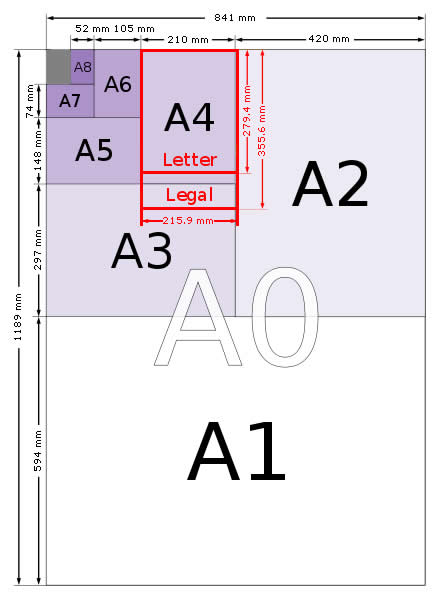
I decided there and then that I would not use sticky notes. That was when I started carrying a notebook all the time. I went through spiral notebooks, soft cover, hard cover, loose leaf, you name it. I realized I wanted something smaller than regular paper and loose leaf notebooks tended not to have good staying power. For a long time I carried an A5 notebook with a red leather cover until one day I was told that it was intimidating to see me writing things down in a red notebook. Oh. I switched to a brown cover, the notebook became fairly invisible.

Life changed again in 2006 and that A5 notebook was too big. I downsized again, this time to an A6.
Paper Sizes for those of us raised on 8.5x11 type paper
I experimented with an even smaller A7, which was a bit bigger than a credit card. I loved it, but I couldn't find a consistent supply and I also couldn't fold a sheet of paper up and tuck it into the back cover, so I bumped back up to the A6 size. I've been holding pretty steady at that size for a while now, but while I often spent some time transferring info over as one notebook filled up, I never spent much time going back through the notebook. For one thing it was hard to find things, and for another they were so messy. Sometimes reading the notebooks put me back in the mindset that I'd been in at the time, but most of the time looking at past notebooks was more like looking at a stack of old post-it notes. Sure they were all together, but they were just information, there wasn't much meaning to them. 

Fast forward to late 2018. I'm not sure why I took a closer look at bullet journals, but I ended up on Ryder Carroll's website and it was surprisingly plain. No fancy handwriting, no watercolor mood trackers, it actually looked a lot like my A6 notebooks. So what was all the raving about?

I figured I'd begin at the beginning and see what the fuss was all about: The Index. Ok, yes, I can see how this would be helpful, but I've had indexes before, I don't quite see the big deal.
Future Log with numbered days 

Next: The Future Log. Again, I don't get it, but ok. On a single page I handwrote 6 months of calendars. The Bullet Journal site wasn't prescriptive, but on the Monthly log it did suggest writing out a column of each day of the month and putting items there. I ended up changing my future log to look more like Megan's at Page Flutter once I actually started using the future log.

The Monthly log was next. Meh, I did it, I don't get the big deal. Ok, whatevs.

Daily Log. I kinda put everything together on one page as a weekly log, and I gave it the structure of The Daily Debrief because I was familiar with it and I knew it worked for me.

Ryder Carroll suggests using some very specific notation and if you do a search you can come up with all kinds of other ways to track your day. It made sense to me, so I went ahead with it.
Task
X Task Completed
> Task Migrated (Started as a • and gets morphed into a > to indicate it was moved to the future)
< Task Scheduled (Started as a • and gets morphed into a < to indicate it was put into the schedule somewhere)
° Event Bullet (can also use o)
- Note Bullet
* Priority
! Inspiration
👁️ Explore (I've never used this)
I also added one for myself - this was to indicate my focus or intention, answering why am I doing these things in particular?
🚩 Focus/Intention (I picked this icon because it sorta indicates wind direction)

So I did this for a week, and then the time came to migrate items from one week to the next. (btw, the official bullet journal says to do this at the end of the month, but there was so much on my list!)

Aha!

I get it.

The magic is in the reflection


Let me back up some. I started out with a monthly log and a weekly log and they were PRETTY!


I was tracking the good stuff and the bad stuff and my intentions, and it felt good. I felt so much more in tune with myself.

About a week in I was on a phone call with our son. I'm not sure why I had my journal out, but I realized that our conversation was more in depth than it usually was, and I credit a lot of it to being able to refer to the good things that had happened in the previous week as well as to talk about why they were meaningful.

Pretty was nice and all, but I needed more SPACE. The next week was going to be simpler.  I'd show you a pic, but I didn't take one at that step.

Later that weekend I was migrating stuff to the new week. I realized my intentions were getting mixed in with mundane to do stuff. I wrapped a rubber band around the spine and created a to-do list in the middle.


Ooh! That worked well. I made a note to make the center spine task list a permanent cutout - or dutch door - the following week.
And that's about when I felt the magic. When I noted my intentions each day I wasn't making an ordinary todo list, I was reaffirming my values and also my goals for the week and for my life. It was kind of funny how some days I interpreted my 🚩 notes in one way, but then a couple days later I would see my intention and realize there was something else I had to do. Yes, some of those got written down as ordinary todo's (Take the paper recycling to Laucala Beach), but they were in line with a larger intention: 🚩 Declutter the office, make it easier to focus in the office.

I'm only three weeks in, but this method is harnessing the habits I already had (carry a notebook, daily debrief) and organizing it into something new and better. Now to work on making the notebook a little prettier.

Good thing I have a bunch of ideas I've saved: https://www.pinterest.com/amerikag/write-it-down/ 

I think I'm going to need a bigger book.

Tuesday, December 18, 2018

A Dream becomes a Goal becomes Reality

The difference between a dream and a goal is that the goal is written down and shared. I know this doesn't have all the details yet, but here goes:

I want to start and run a creative incubator / startup village / NGO hub. I'm not sure what title/description is best, this concept seems as though it would work for multiple purposes. 

And yes, this is like a mishmash of Breather (private meeting spaces), WeWork / Knotel (open spaces), Convene (private and meeting)

I'm imagining a facility with multiple spaces, and multiple uses in these spaces: 
- 2 (or more) Large Rooms suitable for conferences, meetings, trainings
- Large workshop space with hand and power tools, sinks, studio space, suitable for teaching
- 4-6 Private smaller spaces, can be used for interviews, 1:1 meetings and client consultations, ie, dieticians, acupuncture, massage therapists, phone calls
- Open, combined use space that includes
---- a Cafe with open seating
---- a commercial kitchen offering low price healthy food for day visitors and long term tenants. Shifts in the commercial kitchen would be available to small scale food entrepreneurs for their catering
---- Open hot desk seating
---- Retail space showcasing food products and products of local entrepreneurs
---- art from local artists

And programming - oh my ideas for programming. Workshops and training sessions on a zillion topics.
But that's another post.